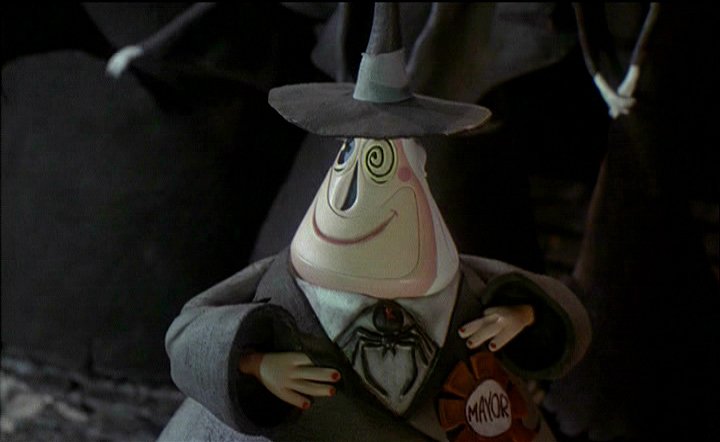
You know him the moment you see him: a lanky, harried figure in a top hat, perpetually teetering on the brink of a nervous breakdown. He's The Mayor of Halloween Town, a character whose unique design and constant anxieties play a surprisingly significant The Mayor's Role & Impact in The Nightmare Before Christmas Plot. Far from a mere background player, his bumbling attempts at leadership and literal two-faced expressions are central to understanding the town's chaotic charm and why Jack Skellington’s well-intentioned Christmas takeover spiraled into utter disaster.
He embodies the very spirit of Halloween Town's peculiar brand of governance, where titles often mean less than charisma, and fear of change trumps logical planning. His presence is a constant, visually striking barometer of the town's emotional state, amplifying the stakes and the humor in equal measure.
At a Glance: The Mayor's Essential Role
- Symbol of Ineffectual Governance: Represents formal authority without real power, always deferring to Jack Skellington.
- Embodiment of Town Anxiety: His literal two-faced head visually expresses the town's internal conflict and fear of change.
- Primary Comic Relief: His constant mood swings and panicked pronouncements provide much-needed levity.
- Catalyst for Chaos: His inability to challenge Jack's plans inadvertently paves the way for the Christmas disaster.
- Guardian of Tradition: Represents Halloween Town's rigid adherence to its established (spooky) norms.
The Double-Edged Charm of Halloween Town's Bureaucrat
From his first appearance, The Mayor grabs your attention. He’s a walking, talking visual metaphor, instantly communicating the bizarre political landscape of Halloween Town.
More Than Just a Face: The Mayor's Iconic Design & Voice
His physical design, a collaborative stroke of genius from Tim Burton and director Henry Selick, is unforgettable. Tall, gaunt, and perpetually clad in an elongated coat and top hat, his most distinguishing feature is undeniably his rotating, two-faced head. One side beams with an impossibly wide, cheerful grin, while the other sinks into a deep, furrowed frown of despair. This literal split personality isn't just a quirky visual; it's the core of his character, embodying indecisiveness and the emotional rollercoaster of Halloween Town itself.
The voice, delivered by the late, great Glenn Shadix, completes the picture. Shadix imbues The Mayor with a unique blend of pompous formality and high-strung nervousness. He sounds like a man constantly on the verge of either shouting orders or bursting into tears, often within the same sentence. It's a performance that perfectly captures the character's internal conflict and makes his every utterance a treat. This distinctive combination of visual and auditory cues is what makes him such a beloved figure, appealing to audiences who appreciate both absurdity and vulnerability.
A Pompous Title, A Powerless Official
Despite his official title as the elected Mayor, he holds surprisingly little actual authority. Think of him less as a civic leader and more as a ceremonial figurehead, a master of ceremonies for Halloween Town's annual festivities. When critical decisions need to be made, or when a true leader is required, everyone—including The Mayor himself—looks to Jack Skellington, the charismatic Pumpkin King.
This dynamic highlights a central theme of The Nightmare Before Christmas: true leadership isn't always about the title you hold. Jack commands influence through charisma and capability, while The Mayor, despite his office, merely performs duties and parrots the town's consensus, or rather, Jack’s directives. He’s a poignant (and hilarious) example of institutional stability that, paradoxically, lacks actual governing power. For a deeper dive into the unique hierarchy and power dynamics within this spooky municipality, you might want to check out the Mayor Nightmare Before Christmas hub.
The Litmus Test for Chaos: His Role in Halloween
In his usual day-to-day, The Mayor's main job is ensuring Halloween runs smoothly. He’s the one rallying the ghouls and goblins, announcing the annual fright-fest, and generally presiding over the macabre merriment. During these times, his cheerful face is predominantly on display, as he revels in the town's established traditions. He's in his element, guiding the familiar chaos that everyone knows and loves.
However, even during these seemingly stable periods, hints of his underlying anxiety simmer. He frets over details, over-organizes, and relies heavily on the town's collective, albeit spooky, expertise. This sets the stage for his complete meltdown when the familiar traditions are threatened.
When Christmas Crashed Halloween: The Mayor's Central Anxiety
The narrative of A Nightmare Before Christmas hinges on Jack Skellington's discovery of Christmas Town and his subsequent desire to "improve" Christmas through a Halloween lens. It’s during this pivotal shift that The Mayor's The Mayor's Role & Impact in The Nightmare Before Christmas Plot truly comes into focus.
Jack's Grand Vision, The Mayor's Grand Panic
When Jack returns from Christmas Town, filled with newfound wonder and an audacious plan to take over Christmas, The Mayor's cheerful face quickly becomes a rare sight. He represents the established order, the rigid adherence to Halloween Town’s ancient customs. The idea of disrupting the annual Halloween celebration, let alone replacing it with something so foreign and bright, sends him into an escalating spiral of anxiety.
He becomes the voice of caution, albeit a largely ignored one. His fear of disruption, even from the beloved Pumpkin King, underscores his role as the reluctant guardian of tradition. He’s torn between his loyalty and adoration for Jack and his ingrained terror of the unknown. This internal tug-of-war is not just a character trait; it’s a narrative device that externalizes the entire town's unspoken reservations.
Flipping Out: His Two Faces Reflecting the Town's Turmoil
The Mayor’s literal two-faced head becomes an instant, visual gauge of the town's escalating turmoil. As Jack’s Christmas plans become more elaborate and outlandish, The Mayor’s head flips with increasing frequency and desperation. Each rotation from cheer to despair highlights the growing unease among the citizens, even as they enthusiastically follow Jack.
His frantic head-flipping serves as both comic relief and a symbolic representation of internal conflict, reflecting universal experiences of struggling between hope and fear. Some academics interpret his rapid mood swings as a theatrical portrayal of chronic anxiety, normalized within the film’s fantastical context. He’s literally wearing his emotions on his face, making him an incredibly relatable figure despite his grotesque design. He’s stuck between wanting to support his leader and sensing impending doom, a predicament many can empathize with.
The Impact on the Plot: A Catalyst for Disaster (and Comedy)
The Mayor’s presence isn't just about his personal anxiety; it actively shapes the narrative, pushing the plot towards its inevitable (and hilarious) catastrophe.
Amplifying Jack's Hubris
The Mayor's constant deference to Jack, despite his own misgivings, inadvertently enables Jack's escalating hubris. Because The Mayor lacks the backbone or authority to effectively challenge Jack, the Pumpkin King receives little pushback. This creates an echo chamber where Jack’s grand, misguided vision goes unchecked. The Mayor's powerlessness, therefore, is crucial to the plot, as it allows Jack's plan to unfold without any significant obstacles from within Halloween Town's leadership.
Had The Mayor possessed true authority or the courage to truly object, the Christmas disaster might have been averted or lessened. Instead, his anxious consent acts as a green light, amplifying the consequences of Jack’s well-meaning but ill-informed choices.
The Unofficial Town Crier of Doom
Though his warnings are delivered with stammering nervousness and are quickly brushed aside by Jack, The Mayor effectively functions as the unofficial town crier of impending doom. Every panicked flip of his face, every frantic plea for caution, highlights the growing danger of Jack’s Christmas mission. He’s the character constantly reminding the audience that something is very, very wrong with this plan.
His role here is subtle but effective. He's not just reacting; his reactions are part of the storytelling, signaling to the audience that the stakes are rising and the festive chaos is about to turn genuinely problematic. He foreshadows the disaster without ever truly understanding its full scope, serving as a Greek chorus of one, albeit a very flustered one.
Comic Relief Amidst Catastrophe
Perhaps his most direct impact on the audience is his role as primary comic relief. In a film that juggles gothic aesthetics with heartwarming themes, The Mayor provides much-needed moments of levity. His exaggerated emotional swings, his frantic attempts to maintain order, and his complete inability to cope with unforeseen circumstances are consistently hilarious.
This comic relief is vital because it prevents the impending disaster from becoming too dark or genuinely frightening. The Mayor’s antics soften the edges of the chaos, making the film's climax—where Jack's Christmas is indeed a disaster—feel more like a charming farce than a genuine tragedy. He grounds the fantastical elements with a touch of relatable, albeit exaggerated, human (or ghoulish) frailty.
Leadership, Or Lack Thereof? The Mayor in Broader Context
Beyond his immediate plot functions, The Mayor offers rich thematic insights into governance, mental health, and the nature of influence.
Formal Authority vs. True Influence: A Halloween Town Hierarchy
The power structure of Halloween Town is a fascinating study in contrasts, with The Mayor at its center.
- Jack Skellington: The Pumpkin King, the de facto ruler, holds high authority through charisma and reputation. His emotional stability is moderate, though his occasional bouts of existential ennui can be disruptive.
- The Mayor: The elected official, but possesses very low ceremonial authority. His emotional stability is extremely low, characterized by chronic anxiety and indecisiveness. He serves as a symbol of outdated bureaucracy.
- Dr. Finkelstein: The brilliant, if eccentric, scientist/creator. He wields moderate authority through his expertise and inventions. He’s emotionally unstable in his own detached, controlling way.
- Oogie Boogie: The true villain, he commands high authority during his brief takeover, thriving on chaos and fear. He exhibits high emotional stability in his evil pursuits.
This comparison starkly illustrates that in Halloween Town, formal titles (like Mayor) do not equate to real power. Influence is rooted in reputation, capability, and public affection. The Mayor’s limited influence highlights a core critique of performative leadership, where appearance and ceremony override substance and action.
The Politics of Performance: Symbolism Beyond the Screen
The Mayor’s dual face and constant performance aren't just for laughs; they carry deeper symbolic weight. His public smile and private frown can be interpreted as a critique of political figures who present a confident facade while privately grappling with doubt or deception. This resonates with fan theories suggesting his dual face signifies truth versus deception in politics, aligning with critiques of performative leadership.
Academically, he’s been analyzed for themes of governance in fantasy, the representation of mental health (through his anxiety), and how physical transformation can express psychological states. Scholars note his frequent speech often lacks consequential substance, further highlighting the emptiness of rhetoric without action, a timeless political observation. He's a visual manifestation of political showmanship devoid of true leadership.
Enduring Appeal: Why We Love This Anxious Administrator
Despite—or perhaps because of—his flaws, The Mayor has become a fan-favorite. He appears in everything from action figures to theme park attractions (like Disneyland's Haunted Mansion overlay), becoming a beloved part of the franchise. His appeal lies in his absurdity and vulnerability; he’s endearing precisely because he struggles so openly.
He’s a relatable figure for anyone who’s ever felt overwhelmed by responsibility, lacked confidence, or struggled with indecision. He seeks order but often creates confusion, wants approval but lacks the conviction, and speaks often but says little of substance. He embodies enduring human contradictions, making him a character who resonates far beyond the screen.
Addressing Your Burning Questions About the Mayor
You’ve got questions about Halloween Town’s most anxious leader, and we’ve got answers.
Who is the voice actor for The Mayor?
The Mayor was famously voiced by the late, great Glenn Shadix. His distinct blend of theatrical pomposity and nervous energy perfectly brought the character to life.
What is the symbolism of The Mayor's two-faced head?
His rotating, two-faced head symbolizes internal conflict, indecision, and the stark contrast between public and private emotions, especially in political figures. It visually represents his struggle between cheerfulness and despair, hope and fear.
Does The Mayor have real power in Halloween Town?
No, his role is largely ceremonial. While he holds the title of elected official, Jack Skellington, as the charismatic Pumpkin King, holds the true leadership and influence in Halloween Town. The Mayor constantly defers to Jack.
Is The Mayor a villain or a hero?
He is neither a villain nor a hero. The Mayor is best described as a neutral, comedic supporting character. He ultimately supports Jack Skellington (albeit anxiously) and isn’t driven by malicious intent, nor does he perform heroic acts.
Are officially licensed costumes of The Mayor available?
Yes, due to his popularity, officially licensed costumes and various merchandise featuring The Mayor are readily available for fans, particularly during the Halloween season.
The Mayor's Lasting Legacy: A Nod to Our Own Anxieties
The Mayor of Halloween Town might be a secondary character, but his The Mayor's Role & Impact in The Nightmare Before Christmas Plot is undeniable and deeply resonant. He’s more than just comic relief; he's a vital cog in the machine that propels Jack's Christmas venture into delightful chaos. His anxieties, his lack of true power, and his constant deferral to a more charismatic leader make the film’s central conflict all the more potent.
He serves as a cautionary yet compassionate portrayal of someone attempting—and largely failing—to maintain control in the face of overwhelming change. For younger audiences, he gently introduces the idea that leaders aren't always strong or all-knowing. For adults, he prompts reflection on the value we place on style over substance in leadership systems and the universal struggle with anxiety and indecision.
Long after the credits roll, The Mayor’s frantic head-flips and high-pitched worries linger, reminding us that even in the most fantastical of towns, the human (or ghoulish) condition of trying to keep it all together—and often failing hilariously—is a story worth telling. He remains relevant because he embodies enduring human contradictions, making him one of the most memorable and beloved characters from Halloween Town.